
Technical Notes
HP 2580 vs 2590 vs XM-45S: Which Solvent TIJ Cartridge Fits Your Line?
The number on the label decides three separate things — ink behaviour, chip and print height — and they do not move together. A comparison of the HP 2580, the HP 2590, the 2588 family and our own XM-45S, written by line type rather than by model number.
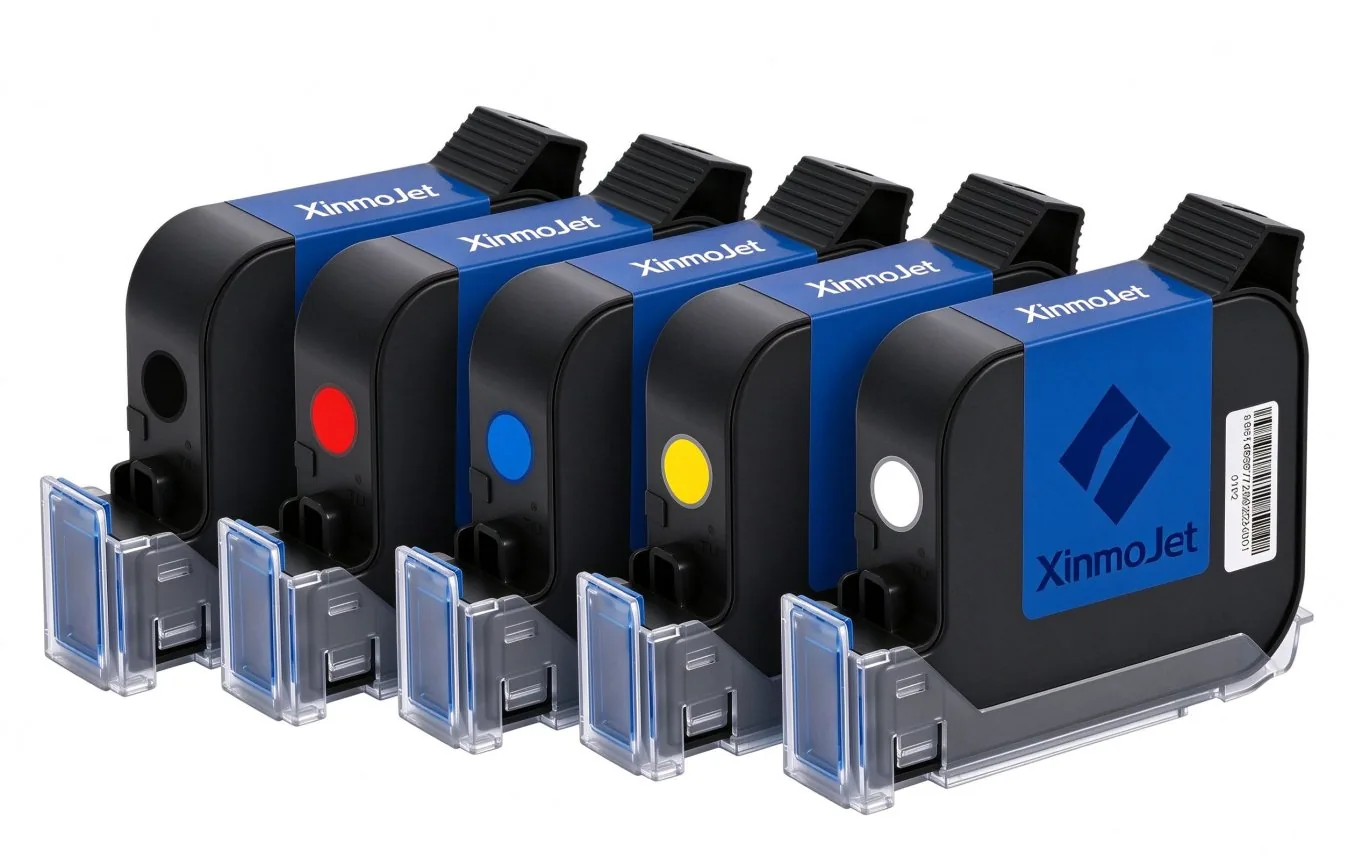
Two original HP solvent cartridges, one compatible family, and one cartridge of ours — four numbers that look like a sequence and are not. The number on the label decides three separate things, and they do not move together.
First, identify the number on the cartridge you are holding
Start with the label, not with a price list. The HP 2580 and the HP 2590 are two different original HP solvent cartridges built for two different kinds of line: the 2580 puts down a larger drop, around 36–38pl on average, and is sold for long decap time (how long the cartridge can sit uncapped and idle before the nozzle plate starts to dry) on hard-to-wet materials such as foil and blister packs; the 2590 puts down a smaller drop, around 29pl, dries in roughly 3–5 seconds and is sold for BOPP and film at high optical density on fast lines.
The 2588 numbers are not HP models at all — they are a compatible family sold mainly for handheld units. And the XM-45S is our own mild-solvent cartridge, not an HP model under another name, and one our factory places in the 2580 system. These are not three generations of one product, and the newest number is not automatically the right one for your line.
That one correction prevents most wrong orders in this category. Buyers search a number they half remember, land on a listing that promises to fit everything, and only discover at the printer that the chip, the drop size or the drying behaviour is wrong for the job.
This article works through them in that order. If you are new to the category, read the pillar guide, What Is a Solvent TIJ Cartridge?, first for what a solvent cartridge is and when to choose one over aqueous or UV ink. If your problem is that the code will not stay on your material, the companion piece, Solvent TIJ Cartridge on Metal, Glass & Plastic, covers adhesion by substrate. This page does the narrower job: which model number fits which line.
A note on sources and on our position: XinmoJet is an independent manufacturer and is not connected to HP. Model and part numbers are used here only to identify the products they belong to, and remain the property of their owners. Where a specification is quoted for an HP model, it comes from HP’s published TIJ 2.5 family data sheet rather than from measurements we have taken. HP original pricing is whatever HP or your dealer quotes you, so no HP price appears in this article.
The four numbers compared in one table
Read the table by row, not by column. Each row is one buying situation, and the right answer changes with the row you are in. Most of what gets framed as an HP 2580 vs HP 2590 question is really a question about the line: whether it pauses, how fast it runs, and what the printer will accept. This solvent TIJ cartridge comparison is deliberately about behaviour on a line rather than about which number is newer.
| Model | What it is | Drop and drying | Best fit |
|---|---|---|---|
| HP 2580 (B3F58A/B) | HP original solvent, black | About 36–38pl; long decap | Foil, blister, intermittent lines |
| HP 2590 (W3T10B) | HP original solvent, black | About 29pl; dries in about 3–5s | BOPP, film, fast lines, dense codes |
| 2588 / 2588+ family | Compatible family, mostly handheld | Varies by maker; check the label | Handheld units, second source |
| Xinmo XM-45S | XinmoJet solvent, six colours | About 29–38pl; dries in 1–5s | HP45-format lines, second source |
Three rows in that table deserve a slower read, because each one is where buyers get caught.
Drop volume is not a quality score. A larger drop lays down more ink per firing. On a hard-to-wet surface — foil, a blister lidding material, a coated film that resists wetting — more ink per drop helps the mark form and hold, which is why the 2580 direction exists. On a fast film line printing small text, barcodes and QR codes, a smaller drop is the point: the 2590’s roughly 29pl drop is what gives it high optical density with sharp edges at speed, instead of a heavier mark that spreads. Choosing the larger drop because it sounds stronger can give you a worse code on film, and choosing the smaller drop for a difficult blister material can give you a mark that never quite forms.
Drying and decap pull in opposite directions. A fast-dry ink is dry on the product sooner — the 2590 at roughly 3–5 seconds, the XM-45S typically at 1–5 seconds on non-porous surfaces, both to be confirmed against your own line speed. But an ink that evaporates fast on the product also evaporates at an idle nozzle plate. That is decap. The 2580 is sold on a long decap time; for the XM-45S the published figure is that the head idles roughly 10–15 minutes on fast-dry solvent before the nozzle plate begins to dry, and that figure is to be confirmed per ink. A line that prints continuously worries about drying; a line that prints, stops, waits and prints again worries about decap. Most buyers only ask about one of the two, and it is usually the wrong one for their line.
The chip is a separate decision from the ink. The XM-45S uses a non-encrypted, open chip: no authentication handshake, no single-use lock-out. That is what makes it possible to qualify it as a second source cartridge alongside an existing supply without replacing printers. The 2588 compatible family is the opposite case — units are usually described as fitting the 2580 and 2590 body, but whether a given unit works depends on its chip set, so read the label rather than the listing. A cartridge can have the right ink and the wrong chip, and it will still not print. If what you need to know is which numbers share a body and which only share a supplier, the cartridge model cross-reference keeps originals, alternates and house numbers in three separate groups.
Full published specifications and pricing for our cartridge are on the solvent ink cartridge page and the pricing page: USD 28–58 per cartridge, minimum order 160. Those are our published figures for the XM-45S only; they say nothing about what an HP original costs.
If your line stops and starts, weight decap first
An intermittent line (a line that prints in bursts, with pauses between runs) punishes a short decap time in a way a datasheet never shows. The pattern is familiar: the first codes after every pause are faint or missing nozzles, an operator purges or wipes, the run recovers, and the waste is written off as normal. Multiplied over a shift, that restart waste and operator time can cost more than the cartridge difference that caused it.
This is the situation the HP 2580 was sold for. Its larger average drop, around 36–38pl, lays down enough ink to form a mark on foil and blister lidding — materials that are hard to wet and often printed exactly on this kind of stop-start packaging line — and its long decap time is the headline property, because the cartridge has to survive the pauses.
If you are evaluating the XM-45S for an intermittent line, decap is the first question to put to us, and the honest starting point is the published approximation: roughly 10–15 minutes of idle time before the nozzle plate begins to dry, to be confirmed for the specific ink. Then test it under your real pause pattern — your longest normal gap, not an average one, at your hall temperature. A capping routine at every pause also changes the answer: a cartridge that is capped when idle is not depending on decap at all. Decide which discipline your operators will actually follow, and test that one.
If your line runs fast on film, weight dry time and density
A fast film line has the opposite budget. The code is printed, and a fraction of a second later it meets a roller, a sealer or the next layer of film. Drying time is only useful measured against that distance and that speed — the drying budget — and a dense code makes it tighter, because a barcode or QR code lays down more ink per mark than a single date line.
That is the HP 2590’s ground: an average drop of about 29pl, a fast dry of roughly 3–5 seconds, and high optical density aimed at BOPP and other films, small text, barcodes and QR codes on fast lines. The smaller drop is a feature here, not a compromise — it is how the edges stay sharp when the code is small and the line is quick.
For the XM-45S on a film line, the published drying band is typically 1–5 seconds on non-porous surfaces, again to be confirmed against your line speed, and the same drying-budget test applies: print your real code, at your real speed, and check the mark at the first point where something touches it, then scan it with the scanner you use at end of line. Film adds a second variable that no model number solves: untreated PE and PP sit at low surface energy, so the surface itself may need corona or flame treatment before any solvent cartridge holds. If a trial fails on film, check the surface treatment and its age before changing cartridges — the adhesion guide linked above works through that check substrate by substrate.
If the label says 2588, the chip set decides, not the number
The 2588 family — sold as 2588, 2588+, ZM2588+, SP2588+, 2588M, 2588K and similar — is where the most misleading listings in this category live. Related numbers such as 2586 and 2589, and reseller aliases like FOL13B or JS10 and JS12, are quoted as fitting the same 2580 and 2590 body. That description is about the physical body. It tells you the cartridge fits the slot. It does not tell you the printer will accept and fire it, because that depends on the chip set fitted to that unit, and chip sets vary between makers and between batches from the same maker. Nor does it tell you which ink you are getting. The 2588 stem is usually quoted as an oil-based fast-dry for bags and carton, while 2586 and 2589 are usually quoted as solvent, and a family name is not a specification.
So the working rule for any 2588-family cartridge is short: read the label on the unit in your hand, not the listing you bought it from, and test one unit in your printer before ordering a quantity. If a seller cannot tell you which chip set a unit carries, that is your answer about the supply, whatever the price looks like.
The same second-source logic is the honest way to evaluate the XM-45S. Its chip is non-encrypted and open — no authentication handshake, no single-use lock-out — and it is built, filled and tested by us as a manufacturer, which is set out on our manufacturer page. But an open chip is a statement about authentication, not a promise that every printer, firmware version and carriage will behave identically. Qualify it the same way: one cartridge, your printer, your product, your code. If the sample does not convince your operators, your existing setup has not changed.
What the XM-45S is, and which HP system it corresponds to
The XM-45S is our own HP45-format cartridge, built on the same platform: 42ml fill, 300 nozzles, native 300dpi up to 600dpi depending on print mode, and fast-dry solvent ink in black, cyan, magenta, yellow, white and red. It ships with an open chip and two print heights — XM-45S-127 at 12.7mm and XM-45S-254 at 25.4mm. Its published drop volume is approximately 29–38pl, depending on model and print mode.
That correspondence is now on the record, so this section can answer the question it used to leave open. Asked directly, our factory puts the XM-45S in the 2580 system and describes both as mild-solvent inks — the lower-aggression end of the solvent family, chosen to wet hard-to-wet surfaces and to survive pauses rather than to dry as fast as possible. That is the direction the 2580 was built for, and the direction this cartridge is formulated in.
What follows is the ink direction and the buying situation: foil, blister lidding and coated film on lines that stop and start. What does not follow is the numbers. Our published drop volume of about 29–38pl covers more than one model and print mode and is not the same measurement as the 2580’s roughly 36–38pl. Nor is correspondence drop-in equivalence: the chip your printer expects, its firmware, the carriage and the material all still decide. Tell us which HP model and printer you run, and qualify the XM-45S by sample on that printer before a quantity order. If a supplier in this category states an equivalence, ask which system it refers to and where the answer came from — ours now has an answer you can check against your own sample.
Print height is a separate decision from the model number
Whichever number you land on, the print height is a choice of its own, and it is the one buyers most often settle too late. The XM-45S comes as the XM-45S-127 at 12.7 mm (half-inch) and the XM-45S-254 at 25.4 mm (one-inch). The deciding factor is the tallest code you print, not the average one: a single-line date fits either body. A QR or Data Matrix code sharing the band with a date line is where 12.7 mm starts to force the code small enough that end-of-line scanners reject it.
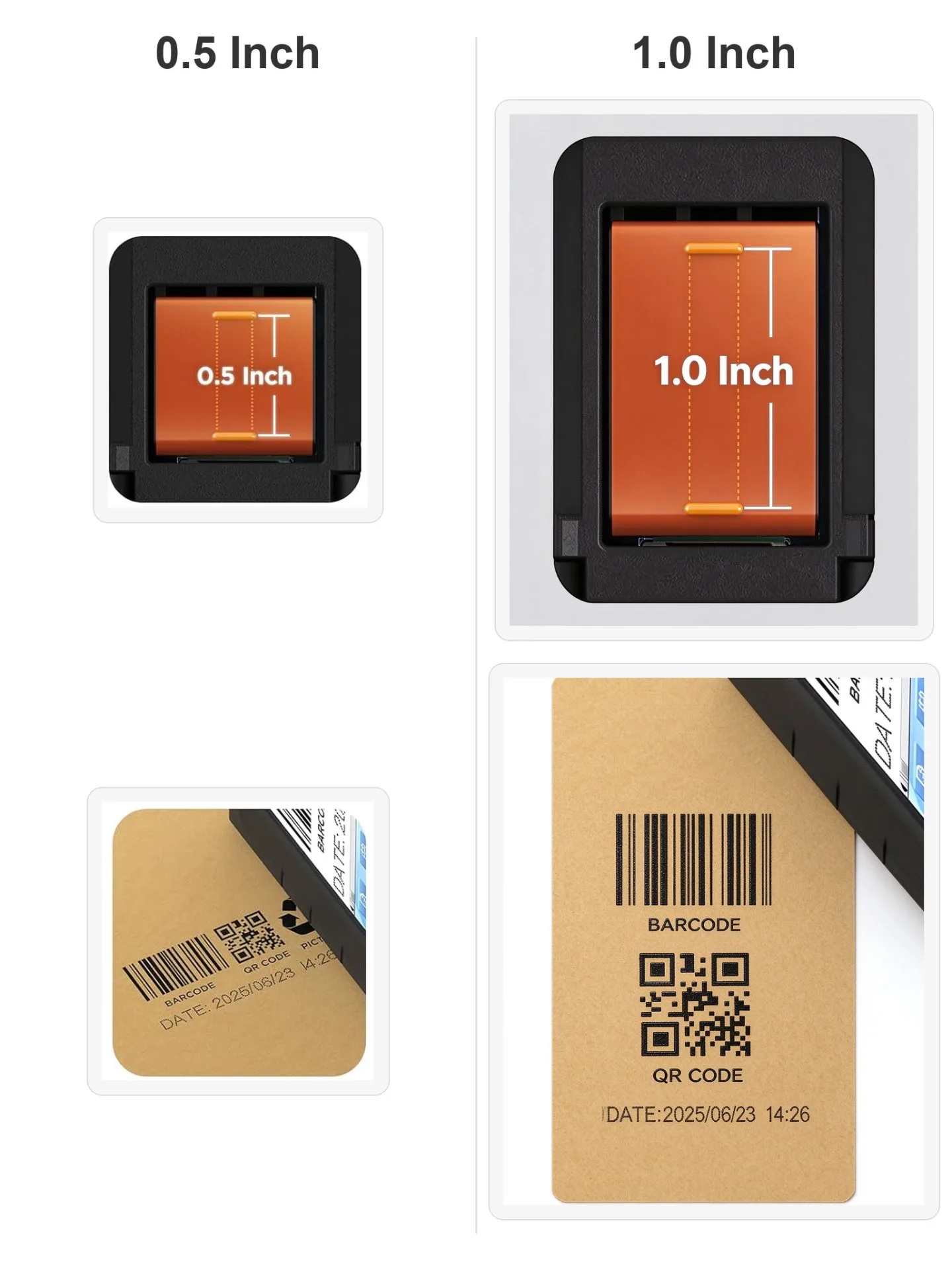
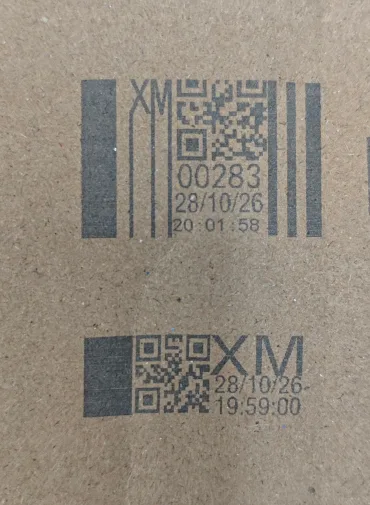
Two checks come before ordering: confirm that your printer carriage and cartridge seat accept a one-inch body, because many compact handheld units take the half-inch body only; and settle the height against your own tallest code rather than from a formula. The full decision — including the QR trap and how width interacts with ink choice — is worked through in choosing between 12.7 mm and 25.4 mm TIJ cartridges, so this article does not repeat it.
A worked example: one plant, two lines, two different answers
Consider a packaging plant that codes two products in the same hall. The first line packs blister cards in bursts: it runs, stops while trays are loaded, runs again. The second runs film continuously at speed, printing a small QR code and a date line on every pouch.
Walk the first line through the table and it lands in the 2580 direction. Its problem is not drying — the product sits still long enough — it is the pauses, and a hard-to-wet blister lidding material. Decap and drop size are the properties that matter, and the restart waste after each pause is the cost to measure in a trial.
Walk the second line through and it lands in the 2590 direction, for the opposite reasons. Its pauses are rare, so decap barely matters; its code is dense and its film reaches a roller quickly, so dry time at line speed and optical density decide the result, and the trial that counts is a scan test on pouches printed at full speed.
Now place the XM-45S in that plant. Its system correspondence points at line one: mild solvent, decap-oriented, aimed at the same stop-start material set. That does not rule out line two. The published drying band of typically 1–5 seconds is fast enough to be worth a trial there; the open chip lets it run alongside the existing supply without changing printers; and the one-inch variant covers the QR-plus-date code. The plant’s correct move is the same on both lines: sample on line one against its longest real pause, sample on line two at full speed with a scan test, and let those two trials — not a model number — decide where it earns a place.
Choose in this order: five steps before you order
Read the label on the cartridge you run today. Original HP 2580 or 2590, a 2588-family compatible, or something else — and note the part number as well as the model number, because B3F58A, B3F58B and W3T10B are how dealers actually distinguish them.
Name your line type honestly. Intermittent with real pauses, or continuous and fast? This decides whether decap or dry time is your first filter, and it eliminates half the table immediately.
Name the surface and the code. Foil or blister lidding, BOPP or other film, coated metal, PET — plus the tallest code and whether a barcode or QR code must scan at end of line. Hard surfaces and dense codes pull in opposite directions.
Settle the print height. 12.7 mm for a single-line code, 25.4 mm when a QR or Data Matrix code shares the band with a date line — and confirm your carriage accepts the body you choose.
Sample before volume, on your printer and your product. One cartridge, your longest pause or your full line speed, your real code content, then rub, wipe and scan tests.
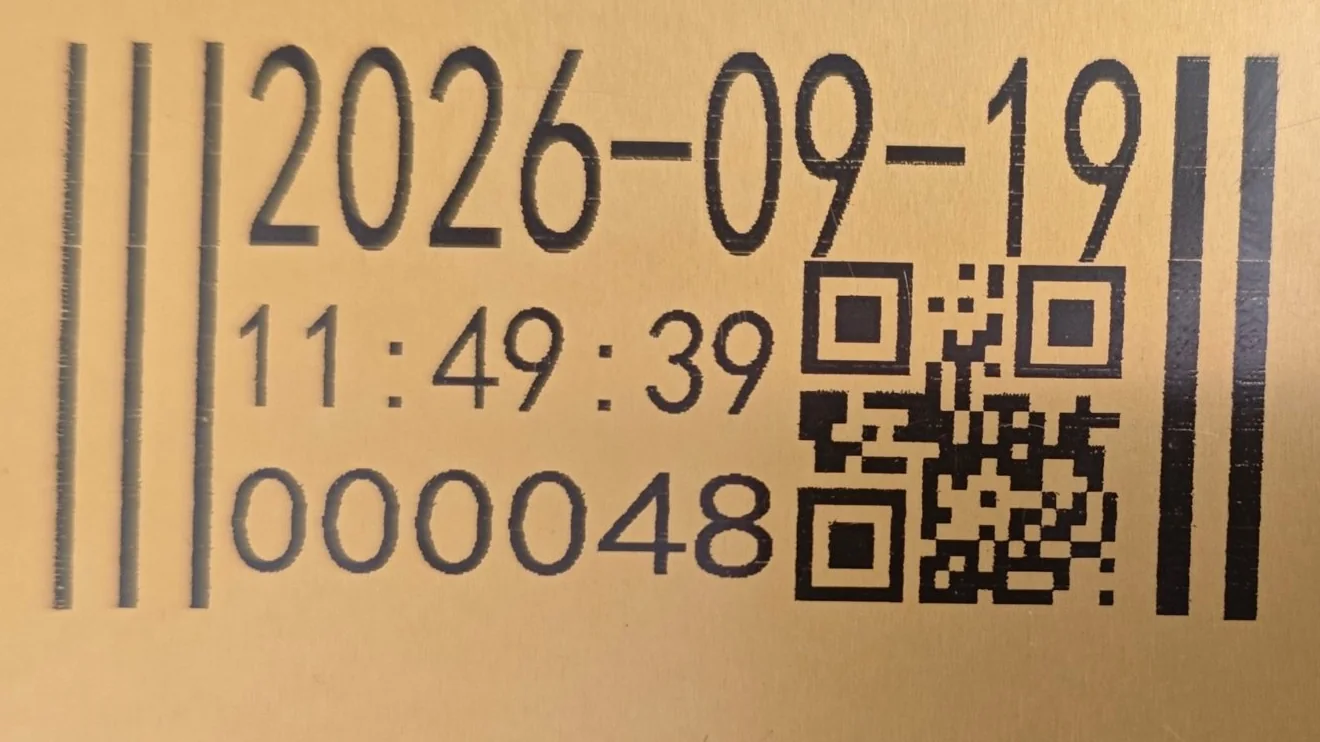
Send us those details through the contact page and we will match a sample to them; for private-label supply at volume, the process and order quantities are on the OEM and ODM page.
Frequently asked questions
Is the HP 2580 or the HP 2590 better?
Neither, in the abstract. The 2580 is built around a larger average drop, about 36–38pl, and a long decap time, for foil, blister packs and other hard-to-wet materials on intermittent lines. The 2590 is built around a smaller drop, about 29pl, and a fast dry of roughly 3–5 seconds, for BOPP and film, high optical density and fast lines. The better one is the one whose first property matches your line’s real constraint.
Is the Xinmo XM-45S a replacement for the HP 2580 or the HP 2590?
Our factory puts the XM-45S in the 2580 system: both are mild-solvent inks, and the cartridge is aimed at the same buying situation — foil, blister and coated film on lines that stop and start. That is a statement about the ink system, not a claim of drop-in equivalence. Our published drop range of about 29–38pl covers more than one model and print mode, so it is not a like-for-like figure against the 2580’s roughly 36–38pl; your printer’s chip, firmware and material still decide the result. Tell us which HP model and printer you run, and qualify it by sample on that printer. If you run a 2590 for fast film work, the smaller drop and the 3–5 second dry are still the reason to stay on that side.
What is a 2588 cartridge, and will it work in my printer?
2588, 2588+, ZM2588+, SP2588+ and similar numbers are a compatible family, usually sold for handheld units and usually described as fitting the 2580 and 2590 body. Fitting the body and being accepted by the printer are different things: whether a given unit works depends on its chip set. Read the label on the unit, ask the seller which chip set it carries, and test one unit before ordering a quantity.
How long can a solvent TIJ cartridge sit uncapped before it dries?
It depends on the ink, and the figures in this article are published approximations, not promises. The HP 2580 is sold on a long decap time. For the XM-45S, the published figure is that the head idles roughly 10–15 minutes on fast-dry solvent before the nozzle plate begins to dry, to be confirmed per ink. Your hall temperature, humidity and pause pattern move the real figure, so test against your longest normal pause — and a capping routine when idle removes the question altogether.
Which print height do I need, 12.7 mm or 25.4 mm?
Choose by the tallest code you print. A 12.7 mm (half-inch) cartridge covers single-line date and batch codes, and two compact lines at reduced character height. Choose 25.4 mm (one-inch) when a QR or Data Matrix code must sit alongside a date line in a single pass, or for taller multi-line content. Confirm first that your printer carriage accepts a one-inch body; many compact handheld units take the half-inch body only.
What does the XM-45S cost, and what is the minimum order?
The published price is USD 28–58 per cartridge, with a minimum order of 160 cartridges; current figures are on the pricing page. HP original cartridges are priced by HP and its dealers, so no HP price is quoted here. Compare cartridges on cost per 1,000 prints measured in your own trial, not on unit price alone — a cheaper cartridge that needs purges, a second pass or a slower speed is not cheaper in production.
Summary: the number is a starting point, the line decides
The HP 2580 and HP 2590 are two original HP solvent cartridges aimed at opposite ends of the same problem: the 2580 at hard-to-wet foil and blister materials on lines that stop and start, where a larger drop and a long decap time earn their keep; the 2590 at fast film lines, where a smaller drop, a 3–5 second dry and high optical density keep small codes sharp and scannable. The 2588 numbers are a compatible family whose real specification is the chip set on the label. The XM-45S is our own solvent cartridge on the same HP45-format platform — 42ml, six colours, an open chip, two print heights, USD 28–58 at a minimum order of 160. Our factory places it in the 2580 system, both being mild-solvent inks, and it is offered to be qualified by sample rather than assumed.
Choose in the order this article used: read the label, name the line type, name the surface and the code, settle the print height, then prove the choice with a sample on your own product at your own speed. A model number narrows the field to one or two candidates. Only the trial turns a candidate into the cartridge your line actually runs.
Related reading
- 30 October 2026
How Solvent TIJ Cartridges Are Made: Inside a Manufacturer's Line
A solvent TIJ cartridge is not bought parts relabelled. It is ink formulated and filtered, a body prepared and…
- 29 October 2026
How Much Does a Solvent TIJ Cartridge Really Cost? Cost per 1,000 Prints
USD 28–58 buys a solvent TIJ cartridge, and that number decides nothing. What reaches your margin is the cost …
- 27 October 2026
Solvent TIJ Cartridge on Metal, Glass & Plastic: Adhesion Guide
Adhesion on metal, glass, PET and PE/PP film fails for five different reasons, and the cartridge is rarely the…
Want this confirmed on your own material?
We print on samples of your actual substrate and send them to you. Send the material, the line speed and the code content, and we will tell you honestly whether the fault is the ink, the surface or the line layout.